Municipal garbage services across Memphis enforce strict limits on weekly trash bin volume, often leaving property owners stranded when standard carts overflow. When seasonal yard maintenance along tree-lined parkways…
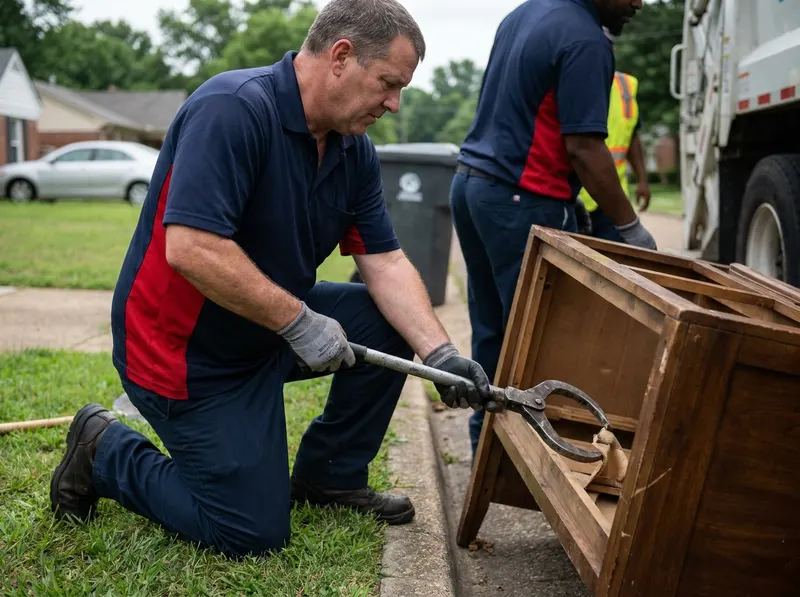
Municipal garbage services across Memphis enforce strict limits on weekly trash bin volume, often leaving property owners stranded when standard carts overflow. When seasonal yard maintenance along tree-lined parkways in Central Gardens or major estate clear-outs in Midtown produce heaps of bulk waste, the City of Memphis bi-weekly bulk collection frequently results in long delays. Piles left out on neighborhood curbs for weeks risk municipal code violation citations, kill turfgrass beneath heavy debris, and create neighborhood eyesores. Residential curbside overflow hauling acts as a fast-response intervention, removing excessive piles directly from the street margin or driveway edge without requiring homeowners to rent a trailer or make repetitive runs to the Shelby County landfill.
Choosing curbside overflow removal over a stationary roll-off container comes down to volume density and driveway safety. For a job generating between 4 and 12 cubic yards of debris, such as a tenant turnover in Binghampton or a basement cleanout in Berclair, a curbside load-and-go service eliminates the risk of cracked asphalt or scratched decorative concrete driveways. While a dedicated 15-yard or 20-yard roll-off dumpster fits multi-week interior renovations in Cordova, curbside overflow removal solves acute, immediate blockages within hours. The trade-off centers on labor and placement: curbside hauling requires items gathered neatly at the street curb or driveway apron, offering zero drop-off equipment footprint on the property in exchange for focused, same-day site clearance.
Local property layouts dictate access logistics from the narrow street parking of Cooper-Young to the wide suburban driveways of Southwind. Crew operators use protective boards and pneumatic-tired vehicles during loading to guarantee zero surface damage to curbs, gutters, or adjacent sod. Step 1: Pile materials in an accessible curbside strip clear of low-hanging overhead utility lines and parked cars. Step 2: The crew evaluates the stack against cubic yardage and density thresholds on-site, establishing the precise total without hidden transfer station markups. Step 3: Debris is hand-loaded, swept clean from street pavement, and transported directly to certified regional processing centers in Shelby County.
Every job gets a firm, written price after a free on-site visit.
Tell us about your residential curbside overflow hauling job in Memphis and we'll send a clear, written quote, usually the same day.
 HaulHero Dumpster Rental